
Jeff La Fage
--------------------------------------------------------------------------------
Click on thumbnails and links for enlarged or expanded content.
Introduction
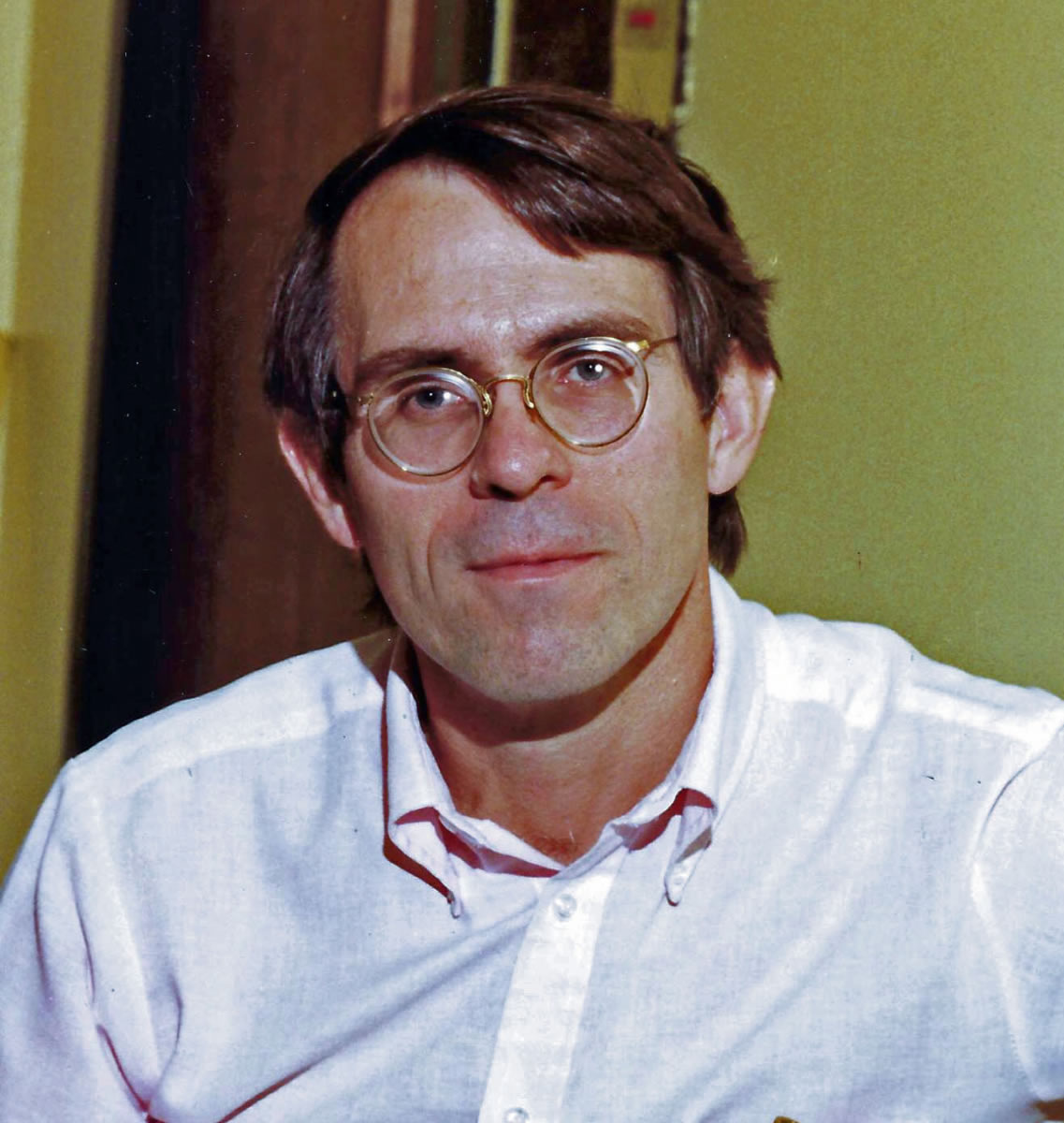
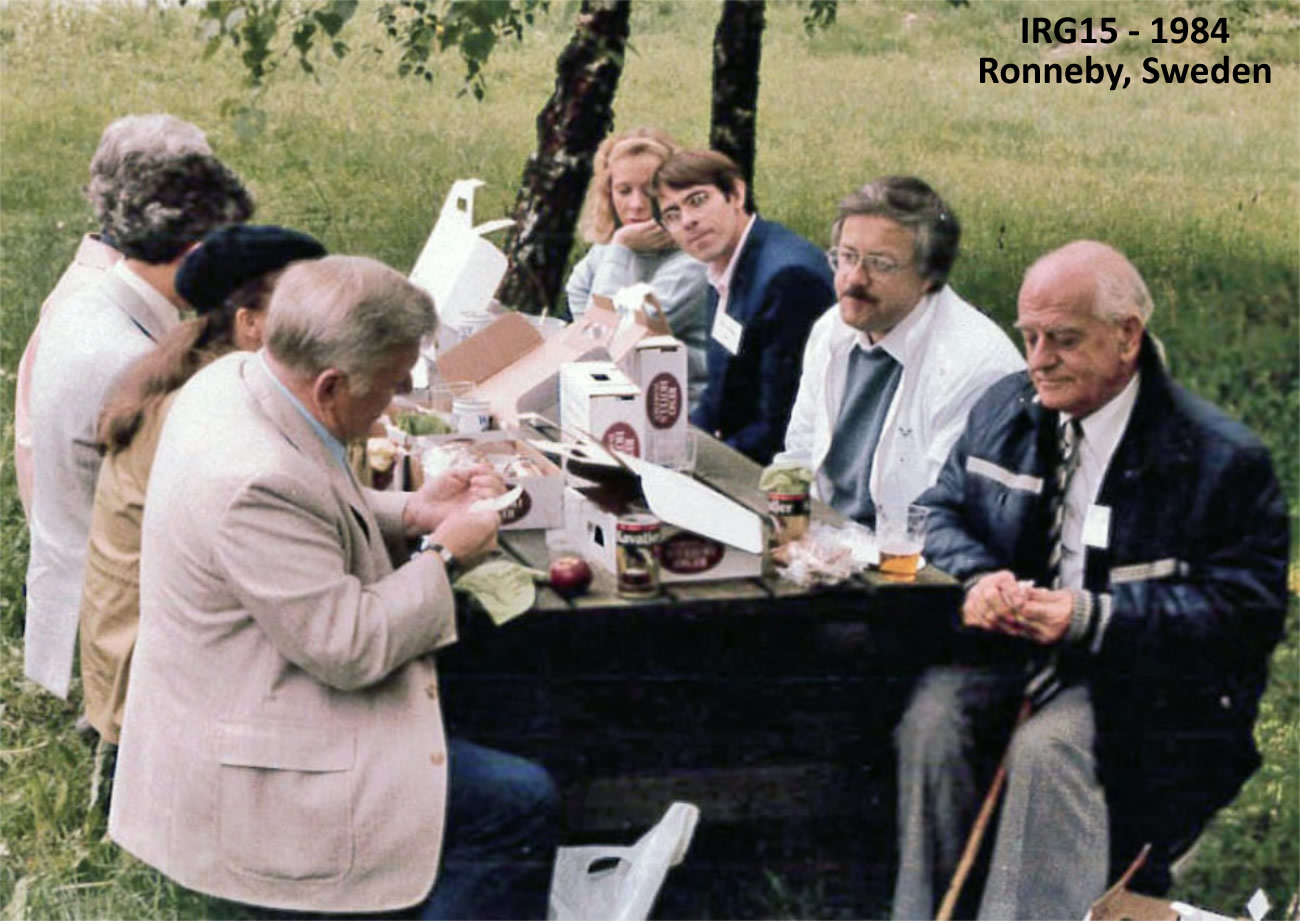
On May 26, 1989, during the Final Plenary of the IRG20 Scientific Conference in Lappeenranta, Finland, Dr Jeff La Fage became the first IRG Vice-President elected from the United States, and the first non-European-born VIce-President of the IRG.
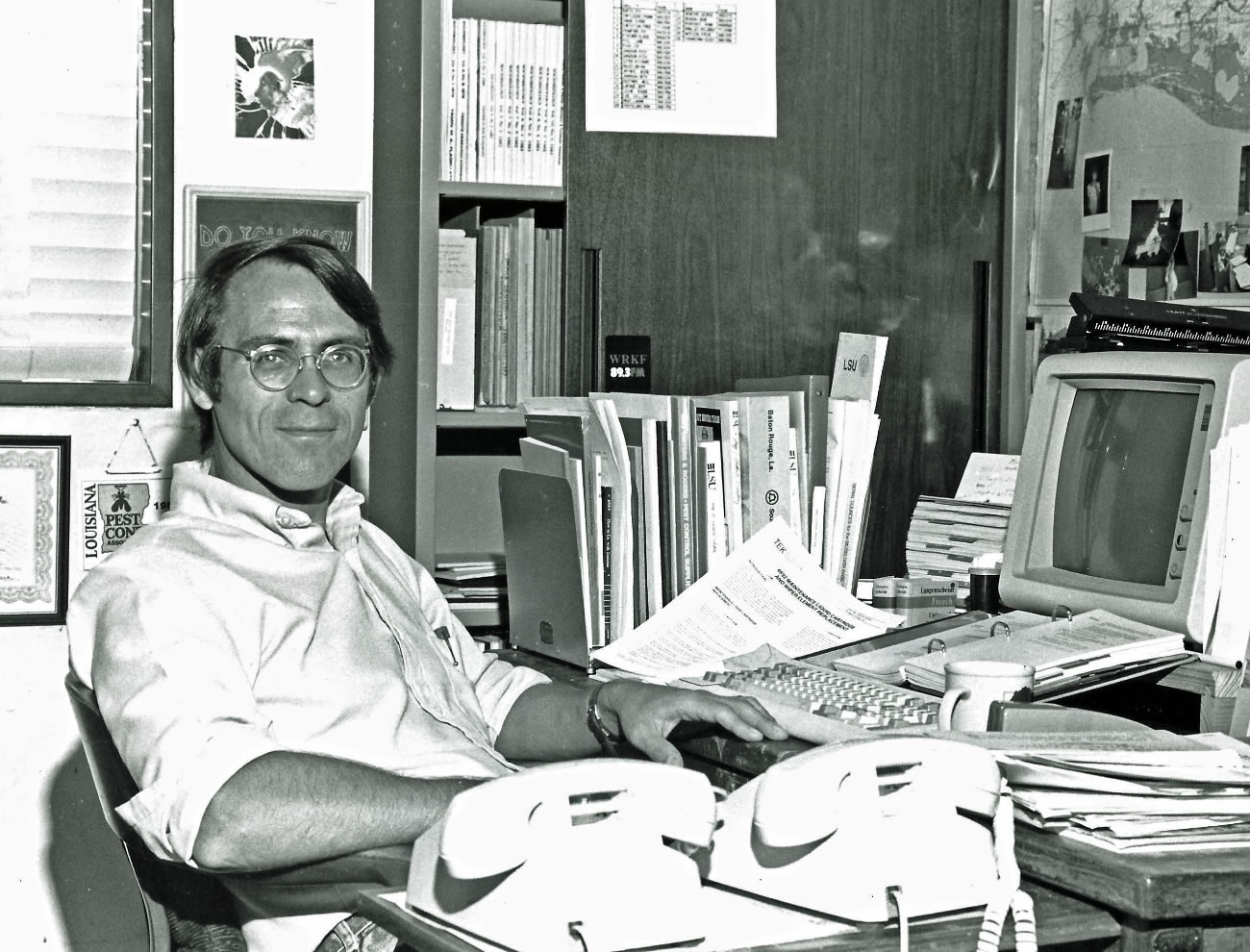
Just two months later, Jeff died on Tuesday, July 25, 1989 when he was shot in the French Quarter of New Orleans. Jeff was 44, a native of Waterbury, Connecticut, and resident of Baton Rouge, Louisiana. He was a Professor of Entomology at Louisiana State University, and co-principal of Centaur Records, Inc. Jeff was survived by wife Wendy, and daughters, Tiffany and Meredith.
Jeff's murder was never solved, but you can read published accounts of the tragedy at this link.
In his memory, the International Union for the Study of Social Insects Jeffrey P. LaFage Graduate Student Research Award was established to recognize a graduate student for their work on a species of social insect that is considered a pest. Dr La Fage, Professor of Entomology at Louisiana State University in Baton Rouge, studied the biology and control of the invasive subterranean termite Coptotermes formosanus. The award was given to a student who advanced or contributed significantly to the knowledge of the biology or control of pestiferous social insects.
--------------------------------------------------------------------------------
Tributes
Michael I. Haverty*
I first met Jeff when I reported for graduate school at the University of Arizona in September 1968. Jeff had arrived earlier and was starting his MS research on grasshopper ecology and physiology. It was about that time that the US President started eliminating educational deferments, as well as marital deferments, from induction into the military. The Vietnam war was raging about that time. Jeff decamped and returned to Connecticut in the summer of 1969 to teach high school; this provided a deferment from the draft and induction into the military.
I returned to Arizona after becoming an officer in the US Army Reserve. I started back in graduate school in January 1971 in the laboratory of Dr. William Nutting to study the ecology of termites in the Sonoran Desert. Guess who arrived six months later to join Dr. Nutting and me in our studies of the termites of the Sonoran Desert. I was beginning a Ph.D. program and Jeff was restarting his MS program. We joined together to study the two predominant subterranean termites: I was assigned Heterotermes aureus and Jeff was assigned Gnathamitermes perplexus. We worked together on several aspects of the biology of these termite species, however one study was one that many people found interesting and weird. We used toilet paper to study the foraging of both species in the same plot of ground.
We (Nutting, La Fage and Haverty) stumbled onto the usefulness of rolls of toilet paper as a feeding substrate suitable to both species. We placed 1600+ rolls on a 40m X 40m section of a Sonoran Desert grassland that we cleared of wood and most of the shrubs and grass. For one year we made observations every 2 hours for a 24-hr period every week. This study allowed us to quantify foraging intensity as it was affected by soil surface temperature and rainfall, as well as quantifying the amount of soil brought to the surface and the change of its chemical constituents in one year’s time. It was pioneering work, and hard work at that, and it made for lots of fun giving talks about the role (not only rolls) of toilet paper in the study of desert subterranean termites. Jeff used part of this work for his MS degree. After that he switched to the study of nutrient dynamics of drywood termites for his Ph.D. degree.
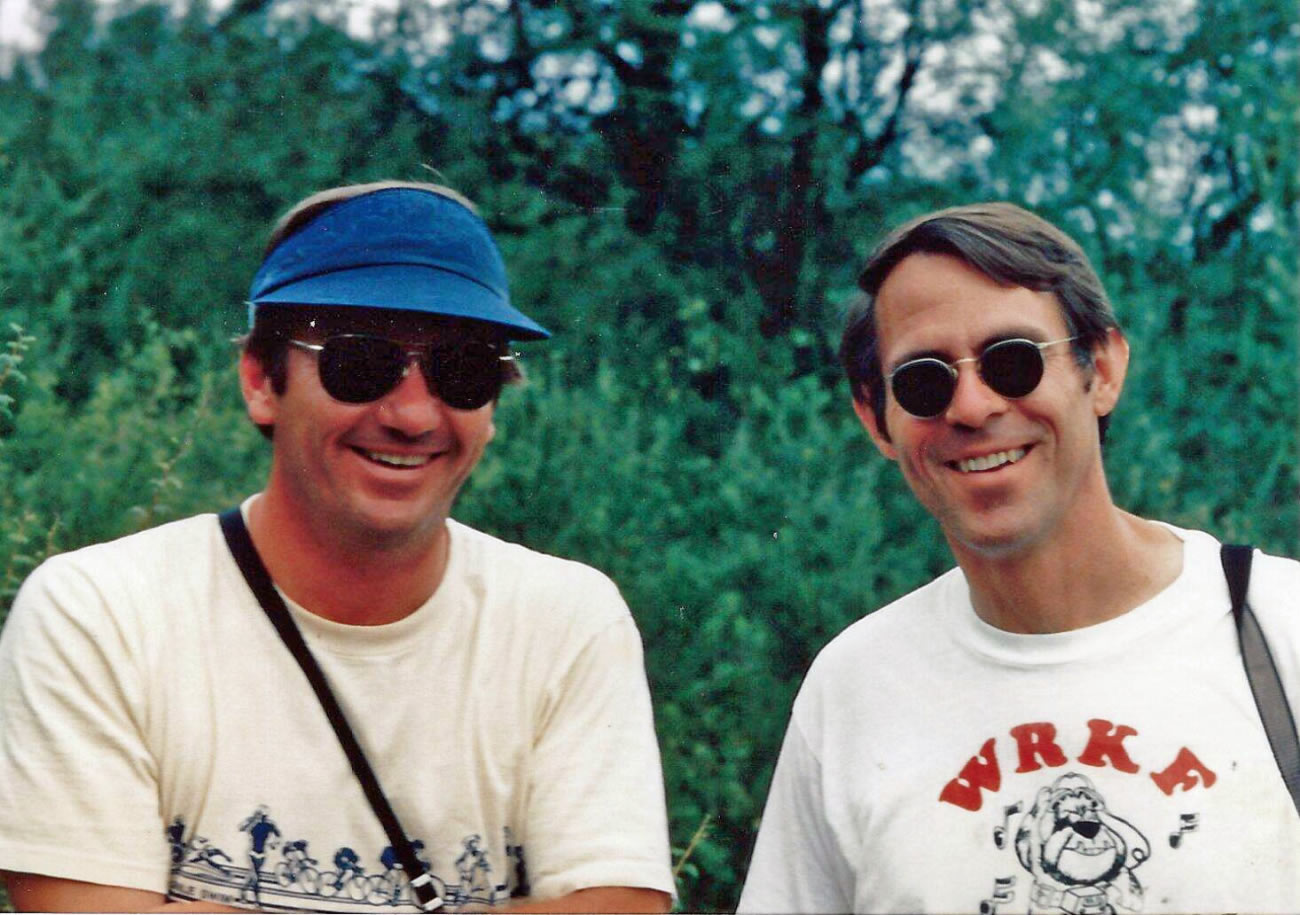
Jeff and I were friends throughout this time at the University of Arizona. In fact, we ended up having adjoining apartments in graduate student housing. Toward the end of our time there, we both bought houses southeast of campus, about a mile apart. We rode our bikes together to “work” almost every day until I left to take a position at the Wood Products Laboratory of the Forest Service in Gulfport, Mississippi. Jeff also had an interest in photography, and he instructed me in the art of B&W photography from the camera to the darkroom to the finished print. We even passed the French exam on the same day, he with a very high score and me barely passing.
After graduating with his Ph.D. Jeff took a job with the National Pest Control Association as the Director of Technical Services. He worked there for about 2 years, then was appointed as an Assistant Professor of Entomology at Louisiana State University in Baton Rouge. He moved through the ranks to become a full Professor rather quickly. He became the nation’s leading expert on the Formosan subterranean termite (FST) with studies in Lake Charles, LA, where FST was introduced into North America. He was also studying the use of baits for the control of FST in New Orleans with a major effort in French Quarter. It was there in French Quarter after attending a meeting that he was gunned down in a senseless murder that still confounds his friends and colleagues to this date.
Jeff was a great friend and colleague to those of us contributing to this Tribute. We are all better people for knowing him.
---------------------------------------------------------------------------------
Deborah A. Waller*
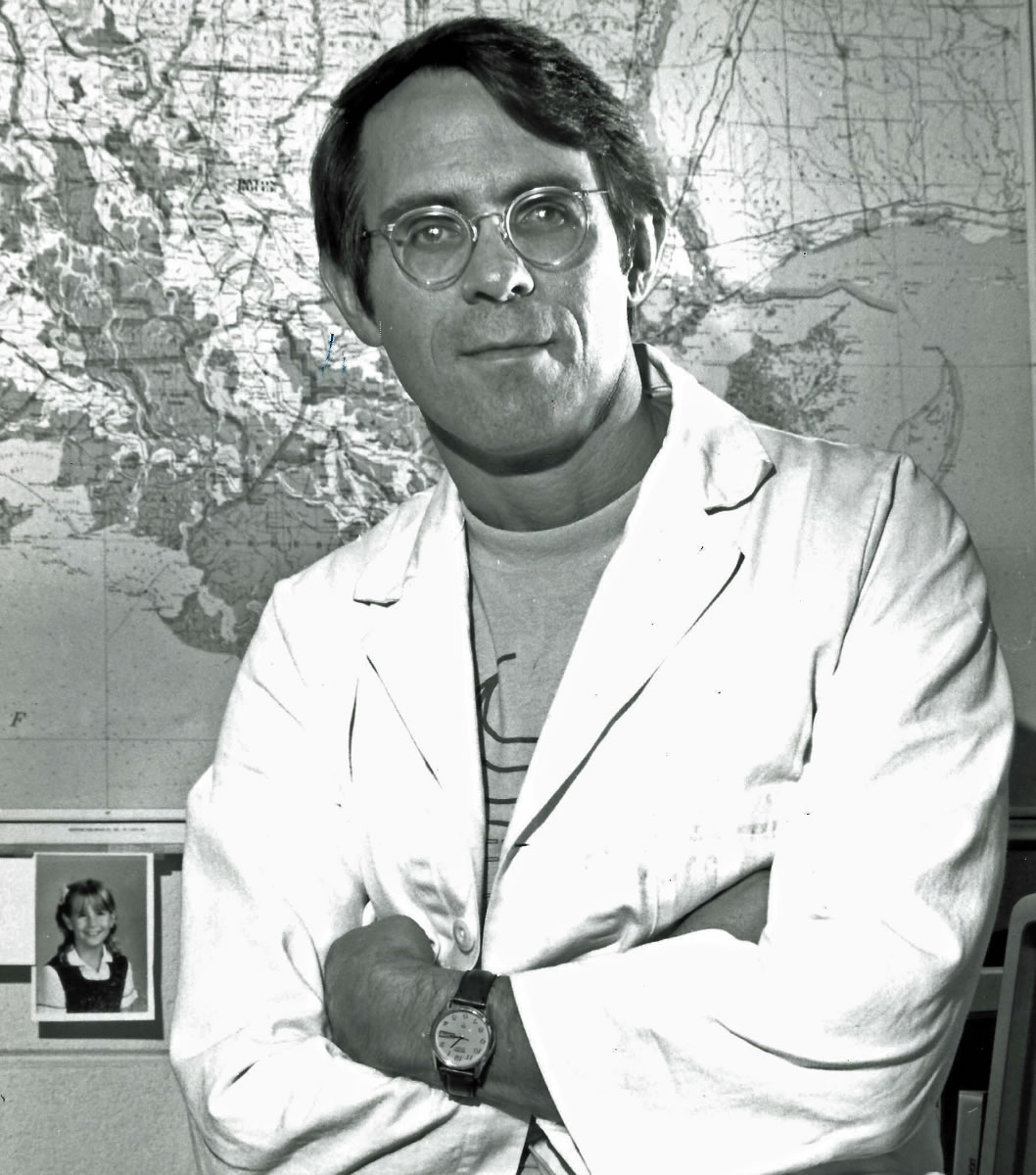
I joined Jeff La Fage’s lab as a postdoc and soon learned that he was a multi-dimensional person with many talents. He loved termites and kept a small culture on agar by his desk so he could observe them continuously. Jeff introduced me to the fascinating world of termite biology and especially the Formosan Termite, Coptotermes formosanus. We spent hours in search of termites by chopping into logs in forests, climbing on homeowner roofs to check out infestations, exploring New Orleans parks to find termites hollowing out trees that snapped in half following storms, and traveling to Lake Charles to study termites inside bald cypress trees in the Calcasieu River. Initially we drove the boat and trailer to our study site but after several mishaps with smoking tires or the boat slipping off the trailer, Jeff made arrangements to keep the boat in Lake Charles. Jeff told many funny and self-deprecating stories on those long drives, including the time he was trying to impress his father with his mechanical skills when he changed the oil in the car and forgot to put the plug back on the oil pan before pouring oil all over the pavement. In addition to having a great sense of humor and being humble, Jeff was very generous. When he was invited to write a book chapter in follow-up to his outstanding 1978 “Nutrient Dynamics of Termites” chapter with William Nutting, Jeff asked if I would like to be the first author.
It was typical of Jeff to promote his students and give them every opportunity to succeed. He gave me access to his LSU assigned car to work in his lab at a former women’s prison where Jeff kept entire colonies of Coptotermes formosanus in large metal trash cans. Whenever the colonies were disturbed, the termites would bang their heads in protest so we crept quietly around the lab. I learned so much during my years as Jeff’s postdoc.
Jeff was dedicated to his research and the pest control operators he served. His life revolved around his family, and he had many interests outside of his work. I feel fortunate to have known someone as knowledgeable, intelligent, devoted, skilled, versatile and compassionate as Jeff and his influence on my life continues to this day.
---------------------------------------------------------------------------
Keith Delaplane*
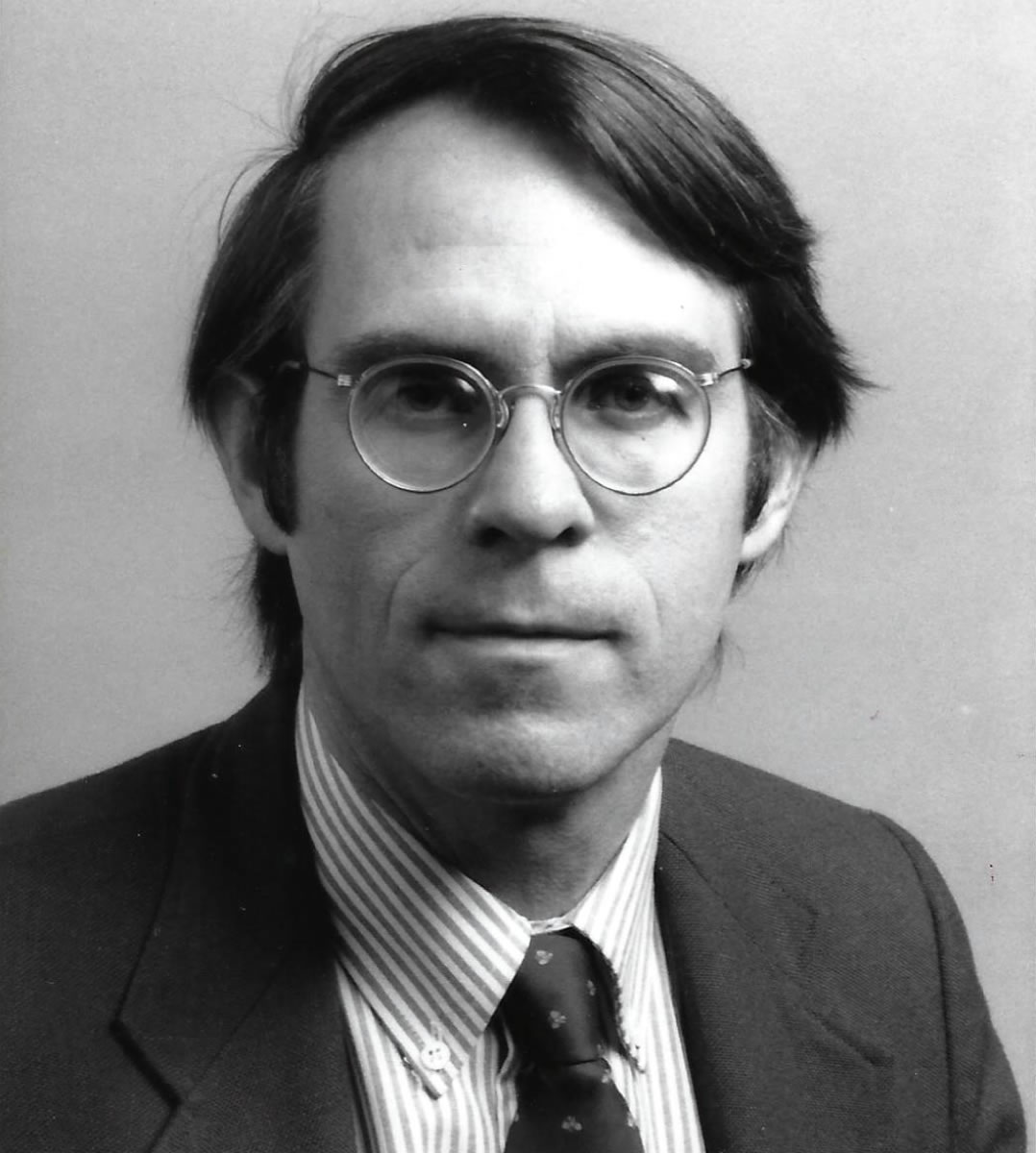
Jeff was my PhD advisor at Louisiana State University from 1987 until his tragic death in 1989. He had served on my MS committee while I worked on a honey bee thesis. By the time I finished that degree and was thinking of whether and where to pursue a PhD Jeff offered me a deal I couldn’t refuse: to work for him full-time as his salaried technician and do a PhD on whatever field research he assigned me. He generously defined that as “anything to do with termite foraging behavior.” Not to overwork the point, but this meant I got a real job ($19,000!) with benefits while all the field work I did counted toward my dissertation. This was unheard of! And so began one of the most formational, liberalizing, and fun periods of my life. It was nothing less than the transformation of a parochial Indiana farm kid with a small-town worldview into something beginning to look like a global scientist.
As my major professor, Jeff’s personal stamp on my life was profound. It was supposed to be. At least in the professional sphere. But with Jeff La Fage you didn’t just learn about termites if you were one of his students. You were dealing with a fully-formed, cosmopolitan, and charismatic personality engaged across wide sweeps of human interests. You would never be the same again.
He was, for instance, routinely called upon by the music school to serve on their graduate committees. Why? Because he was a celebrity – host of the local National Public Radio station’s weekly show Sunday Morning Baroque with Jeff La Fage. Every Sunday his sonorous voice intoned over the airwaves of Baton Rouge. His self-taught expertise in Handel, Bach, and Vivaldi spilled over into a side business co-owning and running a recording studio promoting the revolutionary new compact disc – and specializing, of course, in baroque music. Jeff was also an expert woodworker, tile setter, and all-around handyman. He had a personal workshop worthy of many a public school. And I had the keys to it, not only for cutting up wood for termite experiments but for my personal projects. In those formative years I caught his influence just by being his sidekick. I wanted to be like him. I wanted to be a great scientist with a generous posture toward the whole world and – quirky. A polymath, I think captures it.
Whereas my MS advisor had been a micromanager (which I needed) Jeff gave me nearly free rein on my research (which I needed). The degree of his generosity dawned on me slowly (remember that clueless kid) as I realized that my grad student peers weren’t having nearly as good a time as I was. Jeff paid for me to attend and present papers anywhere, most memorably at IRG’s annual conventions – Ontario 1987, Madrid 1988 (my first landfall in Europe), and Lappeenranta 1989. He sent me for protracted visits to the labs of Nan-Yao Su and Roger Akre to learn new field techniques.
But the most important parts were the routine days – the trips to the cypress swamps of western Louisiana to study Coptotermes formosanus in the hollowed-out trees. The days in the urban innards of New Orleans servicing our alate traps. The chance to hobnob with distinguished lab visitors – Nan-Yao, Rudy Scheffrahn, John French, Kunio Tsunoda. Long drives in the car with Jeff and Debbie Waller (she and I were contemporaries) talking about evolution, the latest in social insects, and just soaking up their knowledge and good company.
It’s no overstatement to say that Jeff has never really left me. I think this is true of anyone who knew him well. As with a natural parent one notices them inside you every now and then – “That’s exactly what Dad would’ve done” – so with my mentor Professor Jeff La Fage. I’m a better person because of him. My students had a better experience because he lived on in me in a small way. He left the world a better place, and I don’t think there’s any higher complement.
-----------------------------------------------------------------------------
Ken Grace*
In Remembrance of My Friend and IRG Mentor Dr. Jeffrey P. LaFage
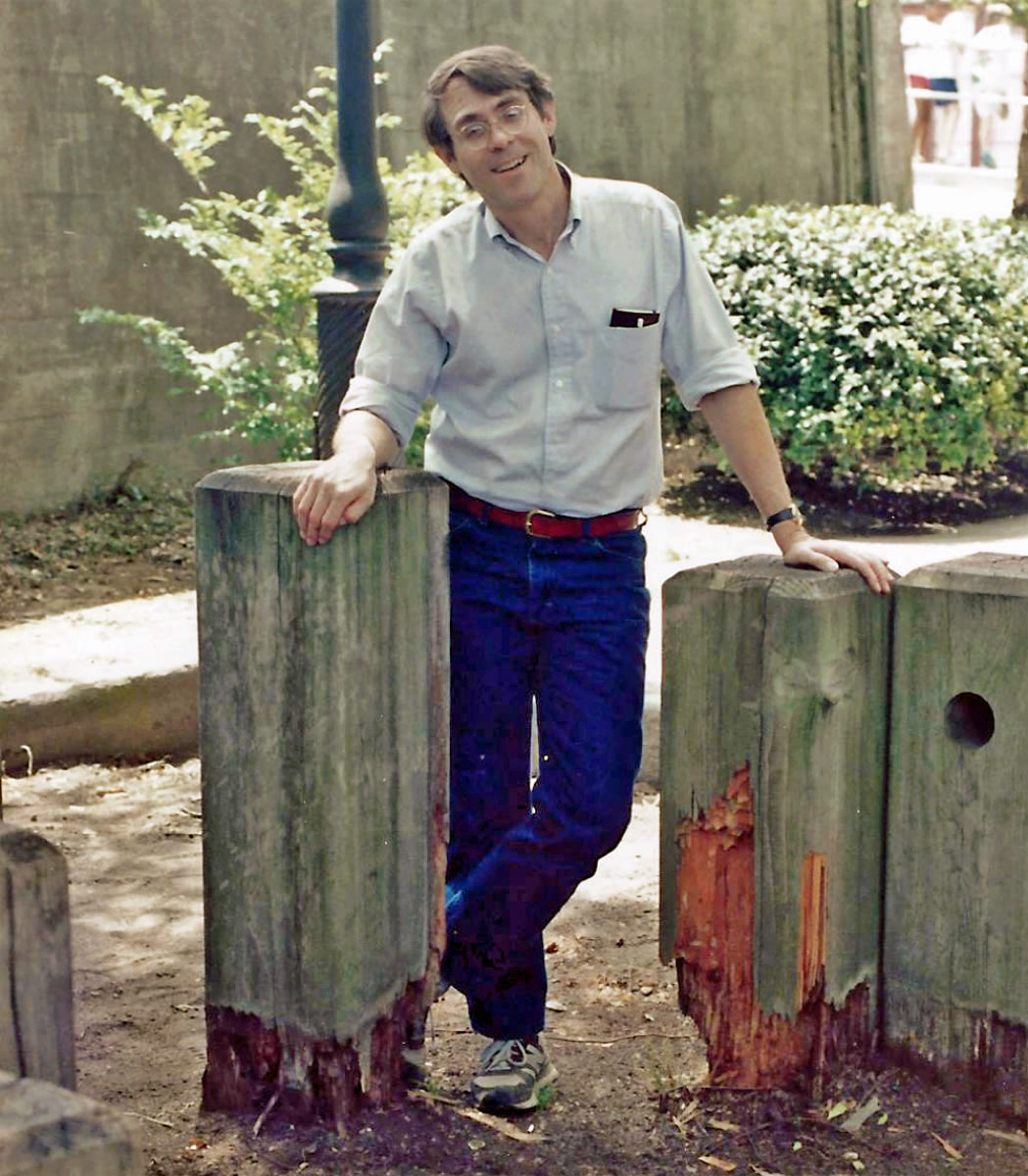
I knew Jeff LaFage for far too short a time, but I am certainly glad that I had the opportunity to do so. My first contact with Jeff was in late 1983, when I cold-called him from the University of California, Berkeley, to introduce myself, ask if he had any advice for a graduate student who had decided to study termites at an institution where they hadn’t been studied in quite a long time, and also ask (in those pre-internet days) if he would mind sending me reprints of his publications. Jeff didn’t mind me calling him out of the blue at all and we had a great conversation. Among many other things, he said that he really thought that I would get a lot out of joining a society called the International Research Group on Wood Preservation – it was cheap for students, and he would be glad to sponsor me. I had noticed that name on some of the reprints that I had requested from the US Forest Service wood protection unit in Gulfport, MS; and when I cold-called Glen Esenther at the Forest Products Lab in Madison, WI, to ask him the same questions, he kindly sent me a small stack of papers that he had written for IRG meetings. So, even though the group itself sounded pretty mysterious to me, I was definitely interested in Jeff’s recommendation!
A couple of months later I received a stack of reprints from Jeff, along with an application for IRG membership with his sponsorship and the “hope that the IRG materials and application enclosed . . . are of value to you.” The letter closed with “Keep in touch!” Keeping in touch, of course, was one thing that Jeff really valued (cf. LaFage 1986) and the reason that he worked hard to build an international community of termite researchers within IRG; both to facilitate communication with each other, and to cross-pollinate with the engineers, chemists, wood anatomists, and wood pathologists who made up the larger membership of IRG.
I didn’t make it to any IRG meetings as a graduate student, although I saw Jeff at a couple meetings of the Entomological Society of America; but after sending in that membership application in March 1984, I sure valued receiving that huge package of IRG documents every year! In 1987, after I had graduated and moved from California to a research position at the University of Toronto, I was able to attend my first IRG meeting, with Jeff convening Working Group 1b, in Honey Harbour, Ontario. What a great meeting that was too! Through that meeting and through Jeff I meant John French, Kunio Tsunoda, his student at the time Keith Delaplane and many others. Jeff knew that the social part of IRG meetings was every bit as important (or more so) than the formal sessions.
Jeff’s interests in termite foraging behavior and the development of baits for termite control were major influences on my own research, both as a graduate student and later in my career. I’ve referred to Jeff’s comparison of termite bait research to the search for the holy grail (LaFage 1984) more than once in talks and papers!
If he had not been tragically murdered in New Orleans in July 1989, Jeff would have been the first American (USA) president of IRG. The 1990 IRG meeting was dedicated to his memory, as was the National Conference on Urban Entomology held that same year, and a special symposium “Use of Biological Information in Termite Control: A Symposium to Honor the Late Jeffery P. LaFage” (organized by his fellow graduate student Mike Haverty, his former postdoc Nan-Yao Su and his PhD advisor Bill Nutting) at the Annual Meeting of the Entomological Society of America in New Orleans in December 1990. The proceedings of that symposium were published in the journal Sociobiology (Haverty & Nutting 1991; Nutting 1991; Su & Haverty 1991).
In May 1990, eleven years after Jeff’s death and at the first IRG meeting held in the USA since 1993, Jim Creffield and I organized a termite research symposium in honor of Jeff and his contributions for the 31st IRG meeting in Kailua-Kona, Hawaii. It was a five hour (!) symposium with 15 researchers from six countries, and the room remained full for the entire symposium, even though it was the last event of the week-long conference. In addition to the IRG papers that came out of that symposium, the proceedings were also published in Sociobiology (Grace & Creffield 2001). Jeff, and the work that he did, clearly had major impacts on a lot of us. He was a wonderful person, a valued colleague and an excellent mentor to young scientists trying to find their way in the wonderful world of termite research.
---------------------------------------------------------------------------------
Susan C. Jones*
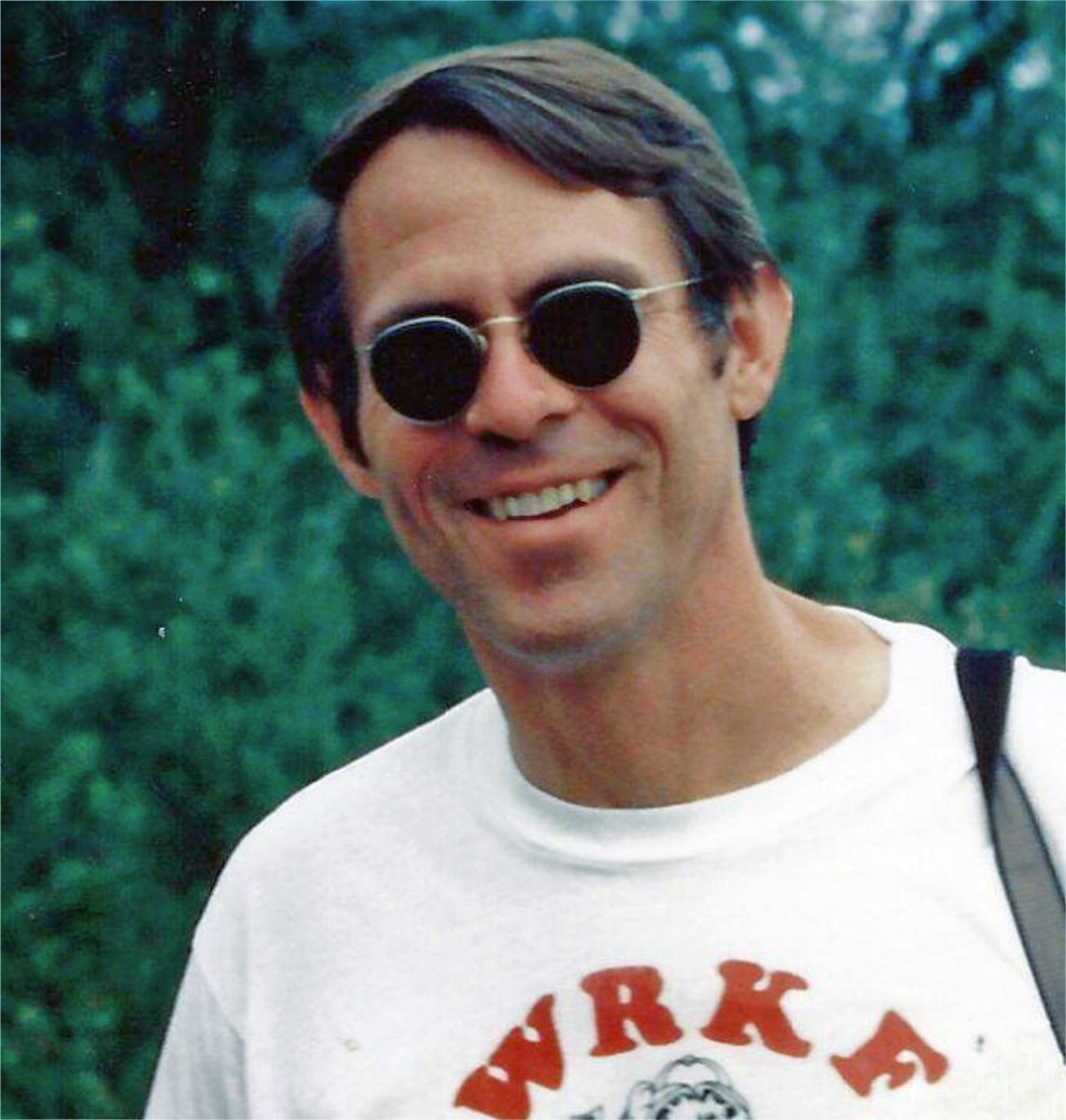
It seems like yesterday when I received the horrifying news in July 1989 that my mentor and friend, Jeffrey P. La Fage had been murdered in the New Orleans' French Quarter. Thirty seven years later, the pain of Jeff's untimely death lingers for his family, friends and colleagues.
I was fortunate to work as an undergraduate in Jeff's lab in 1977-78 and I was Jeff's first graduate student (MS degree in 1980). I witnessed first hand Jeff's devotion and love for his wife, Wendy, and his two daughters, Tiffany and Meredith. I recognize and grieve their profound loss and I hope that these numerous tributes, long overdue, bring solace and also speak to the true measure of the man.
Among Jeff's stellar qualities was his strong advocacy for women's rights at a time when it was not the norm. From grade school onwards, I consistently maintained a high GPA (grade point average), so Jeff was furious when a state association denied my scholarship application (and his nomination) in favor of a male student with a minimum GPA, based on gender expectations. The committee allowed no personal input from nominators or nominees, but simply decided that a female wouldn't meet the physical requirement of conducting crawl space inspections. I speak for myself and other females who have lost count of the vast numbers of crawl spaces inspected. Jeff's response was to nominate me for a national pest management award--I became the first female awardee of the Pi Chi Omega scholarship. A long list of female awardees have since followed, in part due to Jeff's leadership.
Jeff treated each person as an individual whose gender was a background element. He respected others and he demanded excellence from himself and his students. Students were allowed great flexibility and independence in designing their research and Jeff provided guidance. He always had an open door policy and also was readily available by phone. He advised that a comprehensive literature review with accurate citations was essential for any and all publications. He also mandated that each student check and double check their data to assure accuracy of published results. Jeff lived by the motto "Give credit, where credit is due." He insisted that his students know the literature and he expected them to duly recognize relevant researchers and institutions. Jeff was truly committed to scientific knowledge devoid of favoritism or/and prejudice. I have followed in Jeff's footsteps by communicating similar expectations to my mentees.
Jeff furthermore championed student participation at national and international conferences and he generously provided the necessary funds. He recognized the importance of collegiality and networking locally, nationally, and internationally. Jeff had strong respect for the pest management industry. I followed his example and learned so much by working alongside industry professionals and customers rather than self confinement in an "ivory tower."
Jeff was a generous and principled man who spoke in a straightforward manner, and one knew that his words did not change when he was speaking with x versus y. I greatly admired Jeff's truthfulness and integrity and the underlying courage that it demanded. It simply was not in Jeff's nature to value "agreement" and "political expediency" above truth.
Jeff furthermore was a sensitive and kind person who put his ego aside when confronted with betrayal. Jeff eventually told me that his faculty application to LSU included one letter of non-recommendation among the otherwise glowing letters of recommendation. I could see and hear the hurt when he disclosed that the writer was a friend. Jeff chose to continue their friendship rather than reveal his awareness of the betrayed trust. He advised that I should never agree to write a letter of recommendation that I would be ashamed for the person to see.
Jeff played a leading role in advancing our knowledge of termite behavior and termite baiting. I enrolled in Jeff's Urban Entomology course in ca. 1977 and I recall his in-depth lectures regarding termite biology, termite baiting, and anticipated changes to subterranean termite management. At the time of his death in 1989, Jeff apparently was conducting field research on the active ingredient that eventually was registered as the first termite bait in the USA. Unfortunately, Jeff's many contributions to termite baiting have been obscured, in part by secrecy agreements with industry, and by his unexpected death prior to publication of his research methodology and findings.
Jeff was a remarkable man. He was kind, generous person and a strong, ethical leader who positively influenced many, many lives. He leaves a lasting legacy. Jeff is the individual who had the most influence on my career and I am forever grateful for his exceptional mentorship and his friendship.
*Acknowledgements
It is with much gratitude that the IRG acknowledges the contributions by the following scientists to this Tribute to Dr Jeff La Fage.
Dr Deborah A. Waller
Associate Professor of Biological SciencesOld Dominion University, Norfolk, VA
Dr Keith Delaplane
Professor EmeritusDepartment of Entomology
University of Georgia, Athens USA
Dr Ken Grace
Researcher EmeritusDept. of Plant & Environmental Protection Sciences
University of Hawaii at Manoa
Dr Susan C. Jones
Professor of Entomology (Retired)The Ohio State University
Dr Michael Haverty
Chief Research Entomologist (Retired)USDA Forest Service
Washington, DC
This Tribute was written for inclusion with the September 2026 IRG Newsletter.