Scanner for inline detection of heartwood in window scantlings made of Scots pine
Ulrich Hundhausen, NTI
September 2026 IRG Newsletter
Click on thumbnail images or links for enlarged or enhanced content.
Scots pine (Pinus sylvestris) is the most important wood species used for window production in Norway. Heartwood content and its orientation within window scantlings are important quality parameters in the manufacturing process.
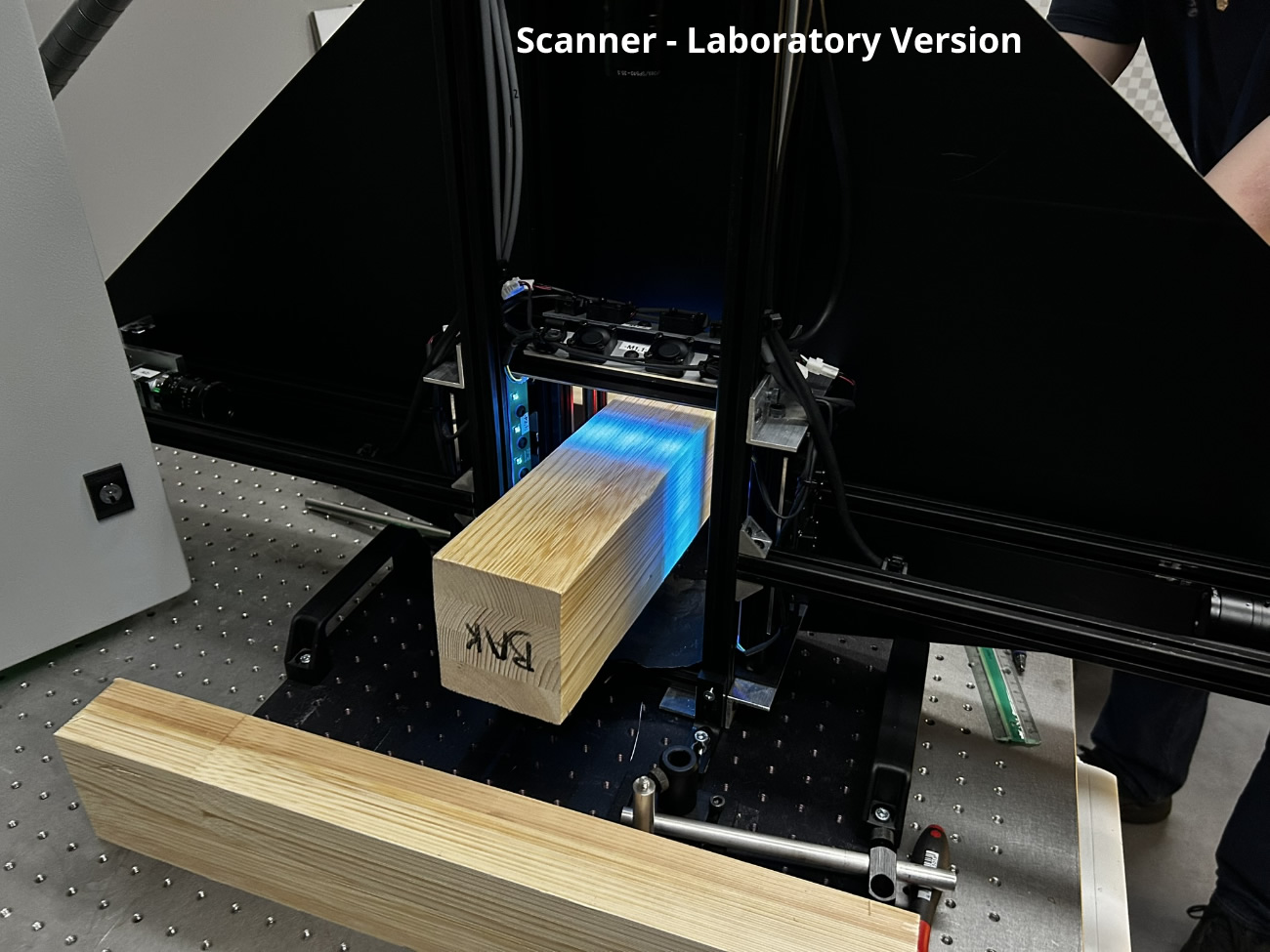
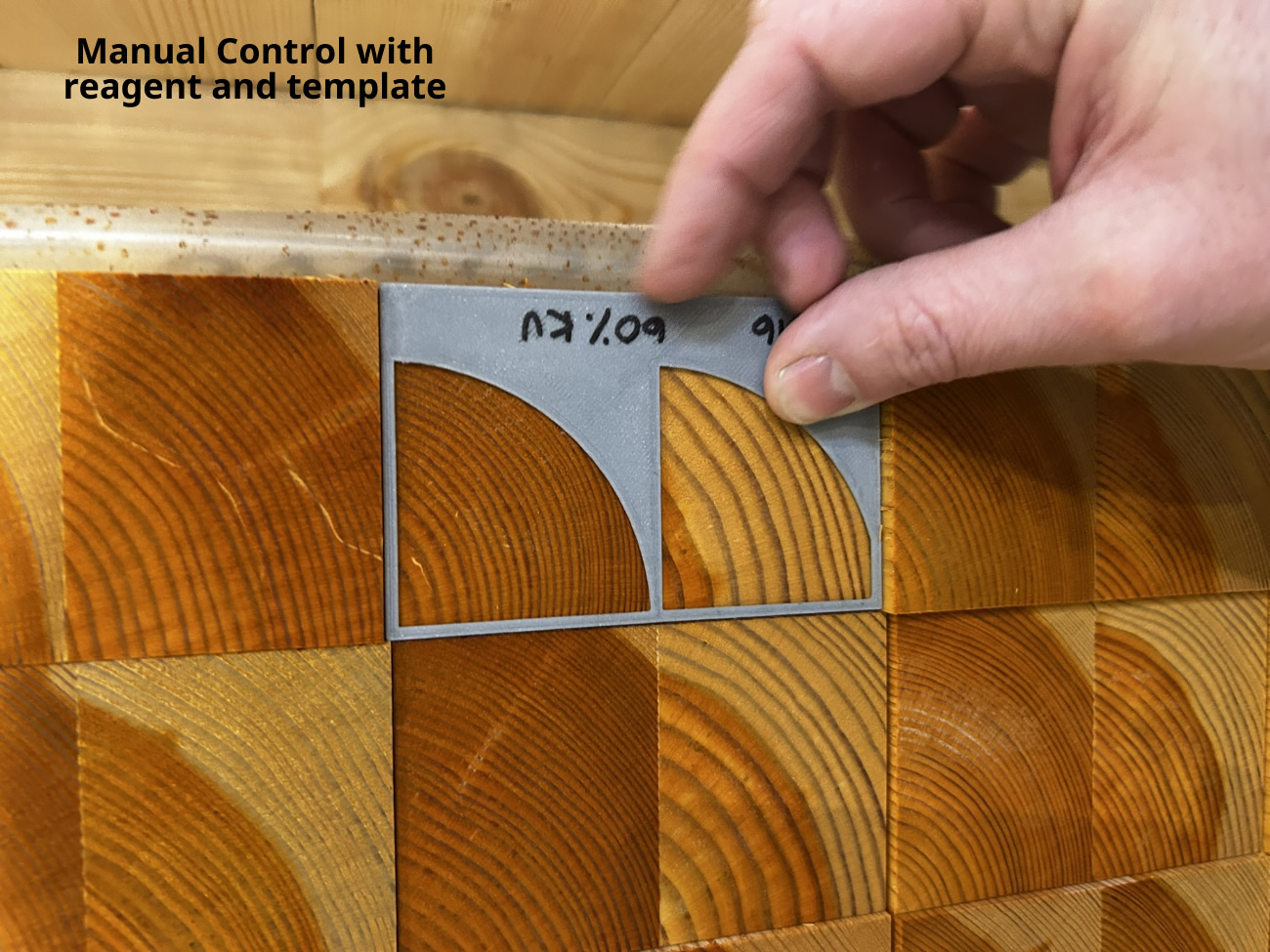
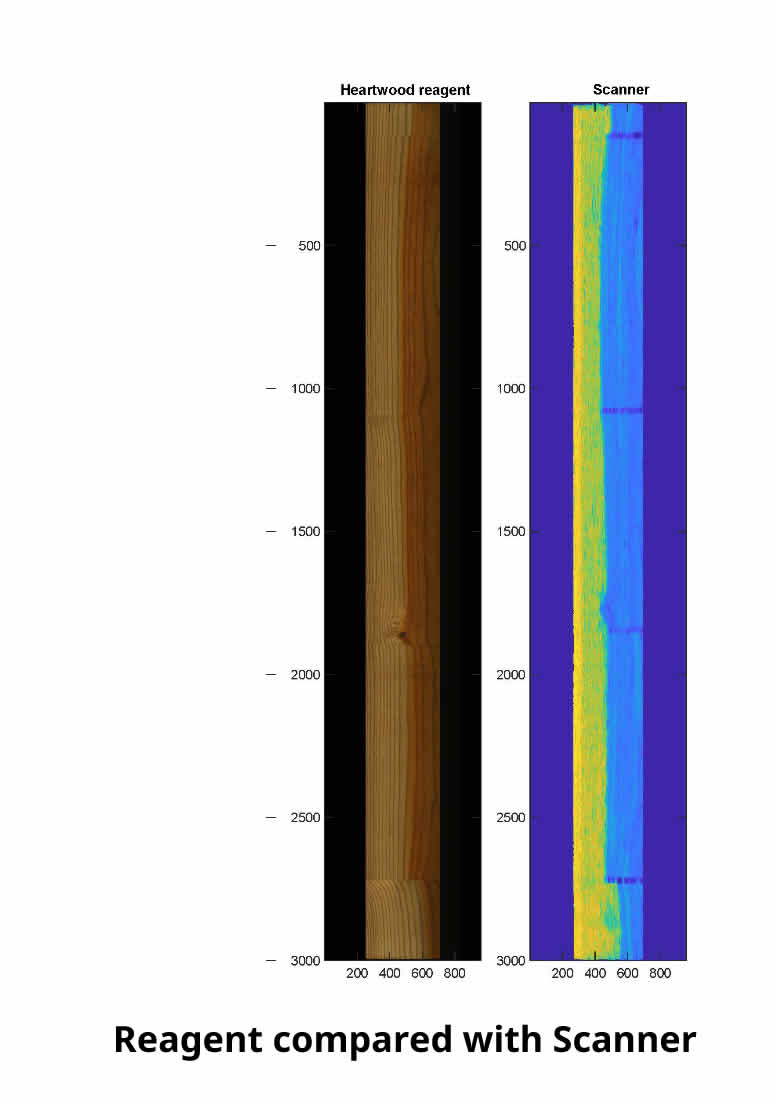
To improve quality control, the Norwegian window manufacturer Gilje collaborated with the research organisation SINTEF Digital to develop CoreXplore, a patented inline scanner for detecting heartwood in finger-jointed pine scantlings during production. Prior to the development of the scanner, Gilje routinely used a heartwood reagent to assess heartwood content, a labour-intensive method for industrial quality control. Following consultations with NTI - Norwegian Institute of Wood Technology, the project partners identified the naturally occurring stilbenes pinosylvin and its monomethyl ethers as suitable fluorescent markers, which ultimately guided SINTEF towards a UV-excited fluorescence detection principle.
Following implementation of the scanner in Gilje's production line, NTI conducted a comprehensive industrial validation trial. The results demonstrated high accuracy and repeatability in mapping heartwood distribution.Although several heartwood detection methods have been reported in the scientific literature, industrial implementation has been limited. CoreXplore is among the first UV fluorescence-based inline systems for heartwood detection to be deployed in industrial production of kiln-dried Scots pine components.