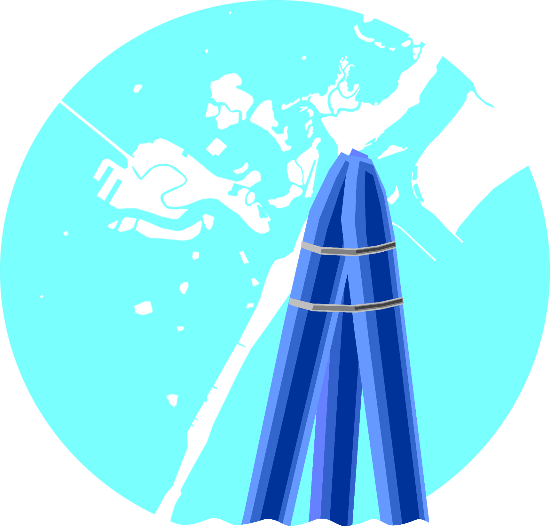
Venice - a unique city and place
Venice is a truly unique reality, not only for its iconic image, but for the extraordinary historical continuity of the relationship between people, the city, and the lagoon. A relationship so profound that it has given rise to an urban and environmental system without parallel, recognized as a UNESCO World Heritage Site. Here, the city does not merely occupy a natural space: it is born, grows, and transforms together with the lagoon, in a dynamic equilibrium that has endured for more than a millennium.
For more than a thousand years, Venice was an independent republic, governed by a complex and highly sophisticated electoral system designed to balance power, maintain stability, and prevent authoritarian drift. This institutional longevity is not just a historical detail, but a reflection of a political and technical culture capable of governing complexity, both social and environmental.
Thanks to trade, Venice long stood as a deeply international and cosmopolitan city: a strategic node between East and West, where goods, people, ideas, and technologies circulated with a degree of freedom rare for the time. This vocation transformed the city into a genuine laboratory of human relations. Here emerged some of the earliest forms of modern urban coexistence: the first condominium as a complex residential organism, the ghetto as a regulated space of forced coexistence but also cultural exchange, and quarantine stations and lazzaretti as systemic responses to public health emergencies. Venice often pioneered social solutions that would later become models studied well beyond its boundaries.
This capacity to innovate spans many domains. Consider the management of knowledge and craft, as in the case of the Murano glass masters, where technological secrecy was an integral part of their craft and art. But Venetian innovation is also, and above all, constructive. Building a city that emerges from water imposed radical challenges: unstable ground, constant humidity, salinity, tidal cycles. In this context, wood proved to be an extraordinarily versatile and strategic material.
Wood forms, in many areas, the very basis of the city’s foundations, with millions of piles driven into the lagoon’s sediments; it is central to systems of transport and shipbuilding; it is a key element in the infrastructures that make navigation possible. The Arsenale of Venice, with its walls that protected the secrets of naval production, represents one of the most advanced proto-industrial complexes in history, a precursor to modern assembly-line production far ahead of its time. Here innovations such as the galeazze were born, construction techniques were perfected, and unique and iconic vessels like the gondola were developed. Wood is also entrusted with functional and symbolic structures such as the briccole, navigation markers that define the lagoon’s waterways and attest to a deep understanding of material durability in marine-coastal environments.
Alongside technique, Venice is also a place where art, literature, tradition, and natural landscape are inseparably fused. From the largest canvas in the world in the church of San Pantalon to the collections of the Guggenheim Museum, from the pages of D’Annunzio and Hemingway to lived daily practices still vibrant today, Venetian cultural production constantly dialogues with its material and environmental context.
From late May to late November, Venice hosts the Biennale, one of the most important international platforms in contemporary art and architecture. The 2027 edition of the Architecture Biennale will be curated by Chinese architects Wang Shu and Lu Wenyu, founders of Amateur Architecture Studio, who are known for their focus on material reuse, craft, and deep engagement with place and building culture, themes that resonate with sustainable construction and local knowledge. For the occasion, numerous palaces in the historic center open their doors to host collateral events by participating nations, an opportunity to visit spaces usually closed to the public and to discover ever-different perspectives of the city, its calli, and its canals. Many of these collateral events are free; check the official Biennale collateral events page for schedules and opening times (link Biennale collateral events page).
Finally, the lagoon itself: a system of extraordinary biodiversity, a mosaic of habitats and morphologies shaped by the rhythm of the tides, the breath of the lagoon. This breath generates complex gradients of environmental parameters, making the lagoon a highly dynamic transition zone, fragile and yet resilient. It is a context that today more than ever represents an open-air laboratory for studying the interactions among materials, ecosystems, and human activity.
In this sense, Venice is not just a city to observe, but a system to explore: a unique case study for those working on wood, durability, material protection, and the relationship between the built environment and nature in conditions that continually oscillate between land and water. It is also a place steeped in legend and mystery. On the map at this link you will find a variety of suggestions for leisure time, monuments, local spots, and some legends, tap an icon to open a window with a story available in both Italian and English, but there is much more to do in your free time. ACTV tickets do not impose spatial limitations and are a useful tool to move around the city and the islands (e.g. a ride with vaporetto line 1 could provide an excellent point of view of Canal Grande). From Piazza San Marco, you can reach the Lido di Venezia in about fifteen minutes, and with a ten-minute walk you will find yourself on the golden beaches facing the Adriatic. San Servolo lies on the line that continues to San Lazzaro degli Armeni (visits possible only at certain times) and is well connected to San Marco by frequent vaporetti (water buses). But remember: the most beautiful thing to do is to throw away the map and lose yourself! If you want to visit some destinations before or after the conference, Venice’s Marco Polo Airport is the fifth busiest airport in Italy in terms of flights and destinations, especially domestic and European. The historic center is also well served by rail, with high-speed connections to major Italian cities (https://www.trenitalia.com/en.html, https://www.italotreno.com/en/booking-train-ticket). Italy is a highly varied and heterogeneous country in terms of landscape, culture, cuisine, and mentality. You can choose from the highest mountains in Europe to 8,000 kilometers of coastline, from art cities with their monuments and museums to the characteristic borghi (small villages) scattered across the territory, from lakes to the Apennines, from mountains to islands large and small, there is something for every taste.

To read more interesting information about Venice either click here or click on the logo above